
Waste management is undergoing a quiet but important transformation. What was once focused mainly on disposal and compliance is now being reshaped by circular economy thinking, tighter environmental regulation, and the need to recover value from waste streams. Within this shift, activated carbon (often referred to as activated charcoal) is moving beyond its traditional role as a filtration material and emerging as an important technology supporting modern waste management and resource efficiency strategies.
From wastewater treatment to food waste valorisation and renewable energy production, activated carbon is helping organisations support material recovery efforts, manage emissions, and enhance environmental performance within waste treatment systems.
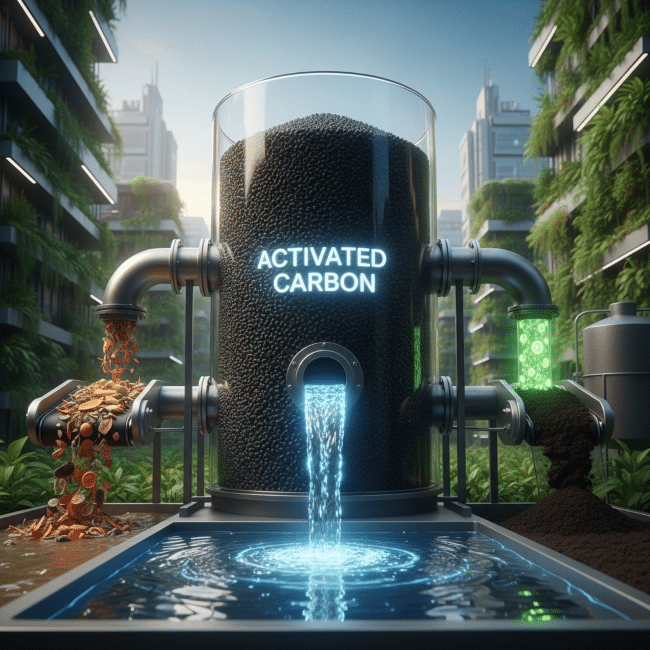
From End-of-Pipe Treatment to Integrated Waste Solutions
Activated carbon has long been used as a reliable solution for removing pollutants from water and air. Its exceptionally high surface area allows it to capture substances that are difficult or impossible to remove using conventional treatment methods.
In wastewater treatment, activated carbon is widely used to adsorb persistent organic pollutants, certain metals, and emerging contaminants such as PFAS. These substances often pass through biological treatment stages unchanged, making activated carbon an important safeguard for protecting surface water and groundwater quality. As adsorption transfers contaminants to the carbon media, appropriate downstream management, including reactivation or disposal in accordance with applicable environmental regulations, is essential.
In air and gas treatment, it is widely used at landfills, recycling facilities, and industrial sites to control odours and trap volatile organic compounds before they are released into the atmosphere. Increasingly, activated carbon is also used in biogas upgrading, where it removes impurities such as hydrogen sulphide and siloxanes, allowing biogas from organic waste to be converted into high-quality biomethane.
Enabling Waste-to-Resource Valorisation
One of the most significant developments in recent years is the role of activated carbon in turning waste into valuable resources. Rather than relying solely on fossil-based raw materials, activated carbon can be produced from a wide range of waste-derived feedstocks.
Agricultural by-products such as coconut shells, corn residues, and fruit stones are already widely used as precursors. More recently, research and pilot projects have demonstrated that food waste, plastic waste, and certain industrial by-products can be converted into effective adsorbent materials.
In this way, activated carbon can contribute to circular economy objectives by extending material lifecycles and supporting reduced reliance on virgin resources, depending on application and lifecycle management.
Closing the Loop Through Reactivation
Sustainability in waste management is not only about how materials are produced, but also how long they remain in use. Unlike disposable filtration media, granular activated carbon can be regenerated through reactivation processes.
During thermal reactivation, spent carbon is treated at high temperatures to remove captured contaminants and restore its adsorption capacity. This allows the same material to be reused multiple times without a loss in performance, when conducted in appropriately controlled facilities.
From an environmental perspective, reactivated carbon can, in many cases, have a lower carbon footprint than newly manufactured material, depending on transportation distances, energy sources, operating conditions, and regulatory requirements. For operators managing large treatment systems, reactivation can offer environmental and operational benefits when evaluated on a site-specific basis.
Supporting Food Waste Management and Renewable Energy
Food waste represents one of the largest and most underutilised waste streams globally. Activated carbon is increasingly being used to improve how this material is processed and recovered.
In food waste collection and composting systems, activated carbon is commonly used to control odours by capturing volatile compounds released during decomposition. This can improve working conditions, reduce community impacts, and support wider adoption of food waste separation.
Activated carbon may also play a role in anaerobic digestion facilities. When used as an additive, it may support process stability and methane production under appropriate operating conditions. This can enhance the efficiency and resilience of facilities handling variable or contaminated feedstocks.
Responding to Regulatory and Policy Drivers
Regulatory changes are accelerating the adoption of more advanced waste management technologies. In the UK, mandatory separate food waste collections starting in 2026 are expected to significantly increase the volume of organic waste available for treatment and valorisation. At the same time, evolving circular economy strategies are placing greater emphasis on recovering materials and energy from waste streams.
Activated carbon can support compliance efforts and operational objectives associated with these policy developments, depending on system design, operating conditions, and regulatory context. Its ability to assist in emissions control, water treatment, and resource recovery makes it a practical option within broader waste management strategies.
A Strategic Enabler for Circular Waste Systems
Activated carbon is no longer just a supporting technology operating in the background of waste treatment facilities. Its expanding applications across water, air, energy, and material recovery position it as an important component of modern waste management systems.
By capturing pollutants, enabling resource recovery, and supporting reuse through reactivation, activated carbon supports the management of waste streams in ways that can enable resource recovery and regulatory compliance within appropriately designed systems. As regulations tighten and circular economy models mature, its role is likely to continue evolving alongside industry needs.
Disclaimer
This article is provided for informational purposes only. Performance, environmental impact, and regulatory compliance depend on specific operating conditions, contaminant profiles, and applicable local regulations.